

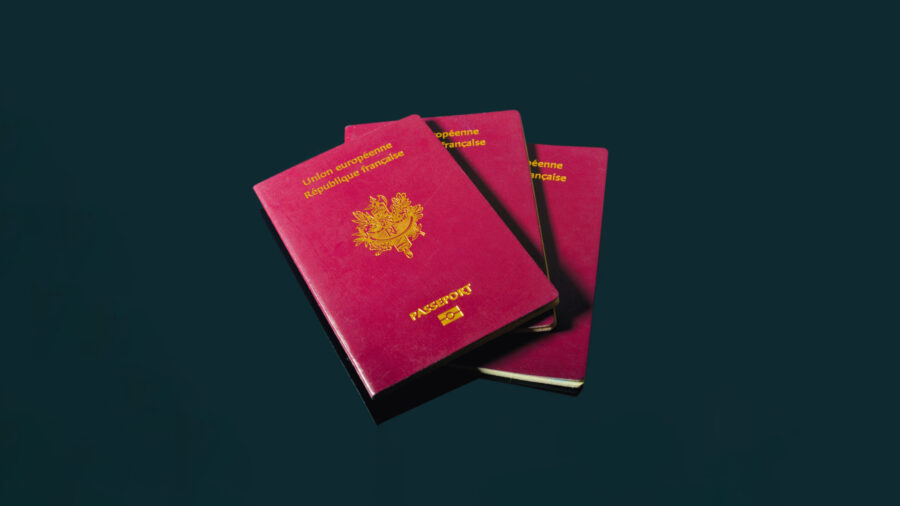
There’s a good chance you’ve never thought about it, but if your mother or father is French, France may consider you one of its own, whether you were born in Paris or Portland.
French citizenship by descent, also known as la nationalité française par filiation, is one of the oldest and most direct paths to a French passport. No language test. No residency requirement. If you qualify, the citizenship is yours, you just have to claim it.
So, how does it actually work?
France passes citizenship from parent to child automatically, regardless of where the child is born. This is different from countries like the U.S., where being born on the soil is what matters most. In France, it’s all about bloodline.
That said, there are two things you need to prove to claim French citizenship by descent:
- Your French parent was a French citizen at the time of your birth.
- Neither you nor your French parent spent more than 50 years living outside of France without holding any French IDs or other official legal ties to French citizenship.
That second condition catches a lot of people off guard. If your French parent left France decades ago and never renewed their passport or ID, you could have a problem. Every situation is different, which is why a personal legal review matters.
What is a CNF, and why do you need one?
If you were born abroad and your parents never declared your birth to a French consulate, France has no official record of you as a citizen. You exist on paper in your country of birth, but not in the French civil registry.
To fix that, you apply for a Certificat de Nationalité Française, or CNF. Think of it as France officially saying: “Yes, you’re one of us.” Once you have it, you can declare your birth abroad to your local Consulate and apply for your first French passport.
The CNF application involves gathering and presenting documentary proof of your French parent’s citizenship at the time of your birth. It can be a lengthy process, and the French authorities are thorough. Getting your dossier right the first time saves a lot of time and frustration. You can learn more about how we handle CNF applications on our French citizenship by descent page.
What about children born to French citizens living abroad?
If you’re a French citizen raising a child outside of France, you should declare your child’s birth to the nearest French consulate as soon as possible. Once the birth is declared and accepted, your child receives a French birth certificate and is added to your livret de famille. Their French passport and carte nationale d’identité can follow.
If your child is approaching 18 and no declaration was ever made, we recommend that you act quickly. Once they turn 18, they must apply for a CNF on their own, in their own name, rather than through you and this process is longer and subject to more discretion on behalf of decision-makers.
One tricky area: adopted children
If you were adopted by a French citizen but the adoption was never recognized in France, you cannot simply apply for a French passport. The foreign adoption must first be validated by a French court. Only after that recognition can you obtain a French birth record and move forward with your passport application.
This is one of those situations where legal help isn’t optional, it’s the only realistic path forward. Our team handles adoption recognition cases as part of our citizenship work.
A note on French women who lost citizenship between 1945 and 1973
Here’s a piece of legal history that still affects families today. Between 1945 and 1973, French women who became naturalized citizens of another country automatically lost their French citizenship, while men in the same situation generally did not. It was a gender-based rule, and it was only declared unconstitutional in 2014 and again in 2025.
If your French grandmother or mother lost her citizenship this way, it can block your own claim to French citizenship by descent. The door isn’t always closed, but it requires careful legal analysis. Read more about this in our detailed article on the loss of French citizenship for women naturalized between 1945 and 1973.
France doesn’t require you to give up your current citizenship
France allows dual citizenship. So, if you’re American, British, Canadian, or from many other countries, you don’t have to choose. You can hold both passports. This is one of the reasons so many people are interested in claiming French citizenship by descent; it opens a door to Europe without closing any others.
The French government’s official citizenship information confirms that acquiring French nationality does not automatically cause you to lose the nationality of your country of origin, though you should verify this with your home country’s rules as well.
Where do you start?
The first step is figuring out whether you qualify. That means looking at your family history, what documents exist, and whether there are any complications like the 50-year rule or a break in the citizenship chain.
Our team at Avocat Grégoire works with clients around the world on exactly this. We’re a French-American law firm based in Paris, and French citizenship by descent is one of our main areas of practice. We review your situation, tell you honestly whether a claim is viable, and handle the full application process if you want us to.
Schedule a consultation and let’s see what your family history might be hiding.
Want to obtain a visa to France or French citizenship?
Work with a French-American lawyer in France today.


